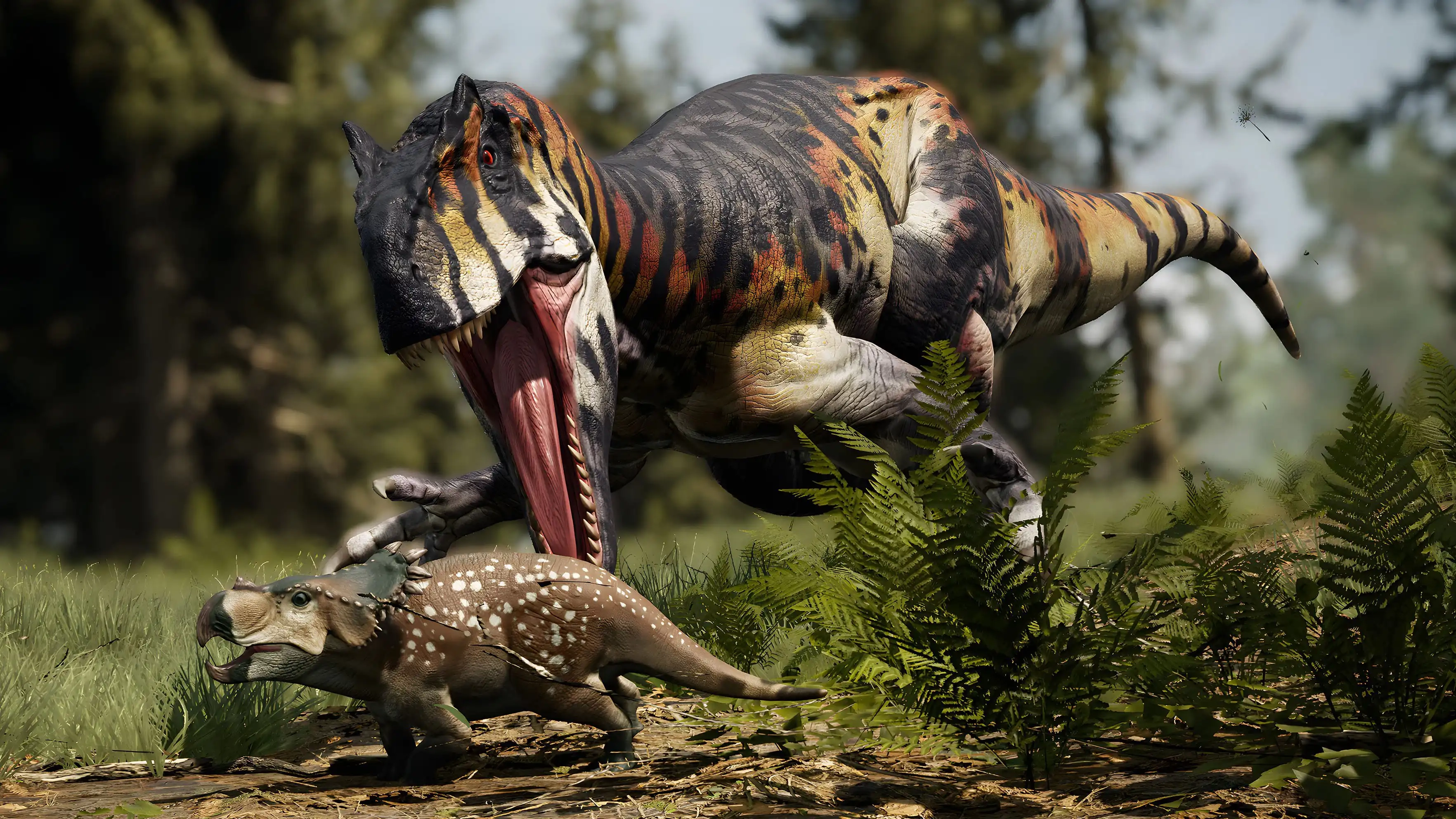
Path of Titans Riparia Guide: Questing Locations, Leveling Up, Nesting, & More
Publicado el por

Compartir:

Compartir en X

Compartir en Facebook

Compartir en Threads

Compartir en Bluesky

Copiar al portapapeles

Compartir por correo electrónico
Ah, there's nothing quite like being a dinosaur. In Path of Titans, you can pick from a variety of carnivores and herbivores, and now you can do so in the coastal region of Riparia. This is the latest map added to the game, and it's filled with a variety of unique environments. With our handy guide, we can help you get started on the Path of Titans Riparia map in no time.
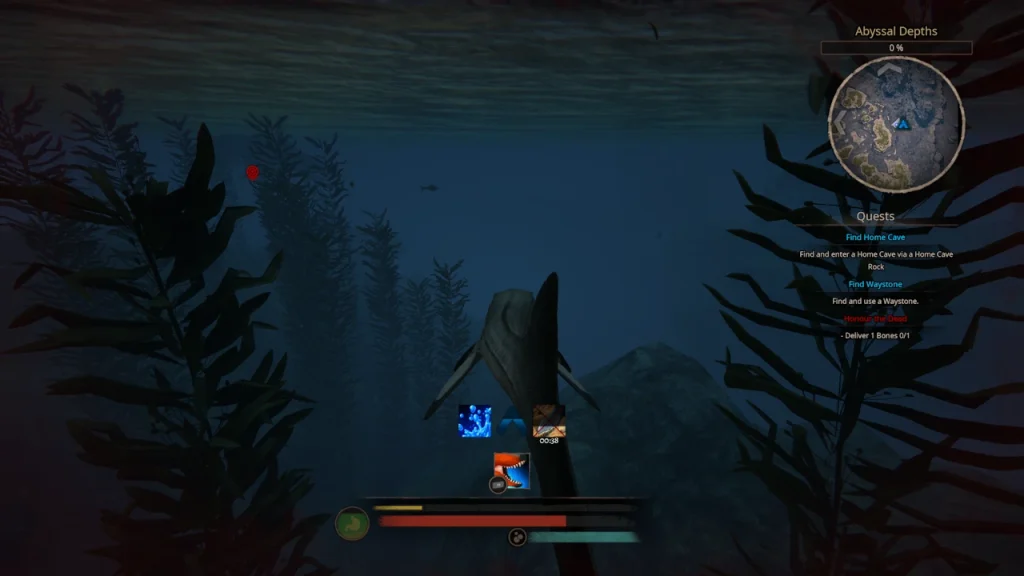 While you can always play as any dinosaur on any official Path of Titans map, not all dinos are equal. In Riparia, the best dinosaurs are those with high swimming speeds. That isn't to say that extra land speed isn't useful on Riparia either. The map has plenty of large patches of land, and, truthfully, you could find success playing as any dinosaur. However, the map's abundance of rivers, lakes, and coastlines makes it ideal for more amphibious or purely aquatic creatures.
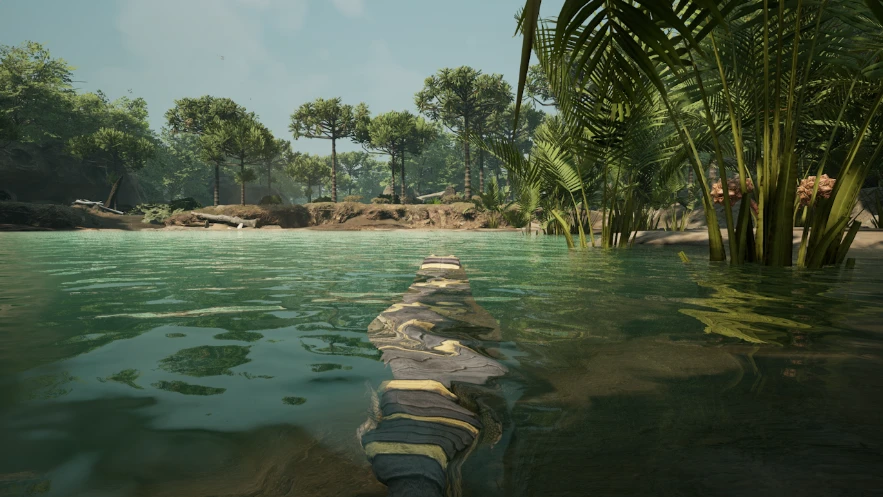 As is always the case in Path of Titans, you'll start as a juvenile creature when you begin a new file. Your top priority should be leveling up as quickly as possible. You don't want bigger, badder dinos to squish or eat you. In Riparia, you'll want to head toward the eastern region. Specifically, the southeast region is called the Wollemi Forest.
Here, you'll find a slightly higher concentration of quests with plenty of the resources you need to collect nearby. Almost everything you'd need to collect, such as lakeweed, pine cones, or flowers, can be found along the coastline. If your quest is tasking you with killing bugs or smaller critters, you'll find those by heading a short distance inland.
While you're getting started, the spots you definitely ought to avoid are Little Claw Pond or Coastal Swamps. These regions tend to attract loads of players. If you head there while you're young, your dino is going to have a harder time staying alive. Continue to move along the coastline and complete quests as you go instead.
Additionally, if you ever find yourself in the arid region of Dry Fang Canyon to the northwest, keep an eye out for ravines. These can be a fantastic place to dart inside and hide from larger dinosaurs.
As is always the case in Path of Titans, you'll start as a juvenile creature when you begin a new file. Your top priority should be leveling up as quickly as possible. You don't want bigger, badder dinos to squish or eat you. In Riparia, you'll want to head toward the eastern region. Specifically, the southeast region is called the Wollemi Forest.
Here, you'll find a slightly higher concentration of quests with plenty of the resources you need to collect nearby. Almost everything you'd need to collect, such as lakeweed, pine cones, or flowers, can be found along the coastline. If your quest is tasking you with killing bugs or smaller critters, you'll find those by heading a short distance inland.
While you're getting started, the spots you definitely ought to avoid are Little Claw Pond or Coastal Swamps. These regions tend to attract loads of players. If you head there while you're young, your dino is going to have a harder time staying alive. Continue to move along the coastline and complete quests as you go instead.
Additionally, if you ever find yourself in the arid region of Dry Fang Canyon to the northwest, keep an eye out for ravines. These can be a fantastic place to dart inside and hide from larger dinosaurs.
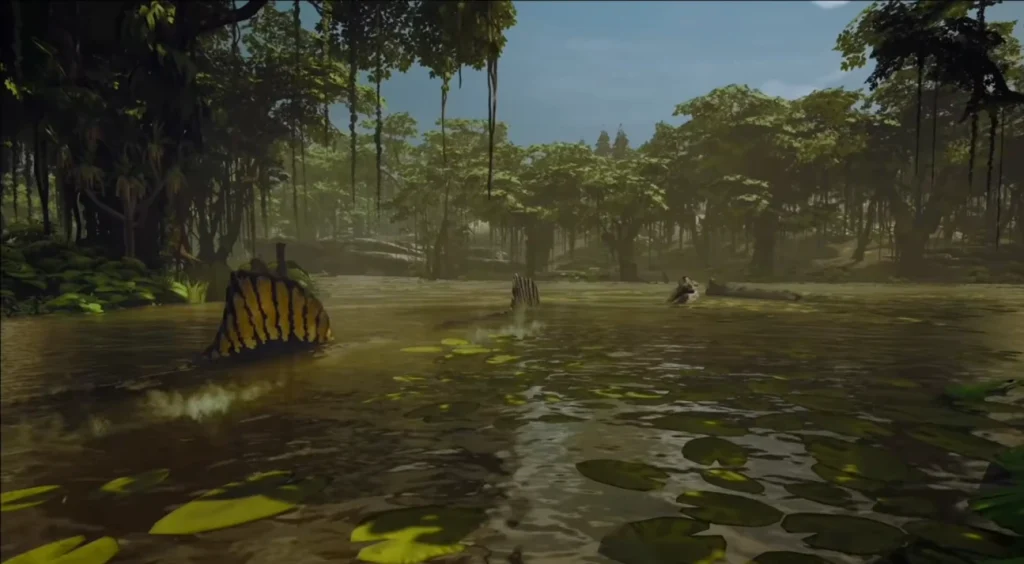 In Riparia, the map features a diverse range of geographical formations. That said, the map does focus a bit more on vertical landmasses. Sharply inclining hills, mountainous regions, and cliff faces abound. And, of course, there are plenty of waterways, lakes, ponds, and coastlines. If you're a dino that thrives in the water or a dino that can scale the world due to increased movement speed, Riparia will be your favorite map.
Of course, the dinosaur that you play as determines your nesting needs. Naturally, you won't be able to create a nest until you reach the penultimate growth stage of Sub-Adult. Once you have, however, you should start thinking about nesting so that you can invite friends to fast spawn in as juveniles wherever you choose.
As far as where you should nest, the choice is really yours. You'll have an easier time making a nest near areas that have the materials your species requires, but you can always carry your nesting materials as far as you'd like. Just try not to die on the way. If you're after mud, roots, branches, or rocks, Black Fern Forest is an ideal nesting spot. If you need bones or reeds, the incredibly popular (and dangerous) Coastal Swamp might be your best bet.
In Riparia, the map features a diverse range of geographical formations. That said, the map does focus a bit more on vertical landmasses. Sharply inclining hills, mountainous regions, and cliff faces abound. And, of course, there are plenty of waterways, lakes, ponds, and coastlines. If you're a dino that thrives in the water or a dino that can scale the world due to increased movement speed, Riparia will be your favorite map.
Of course, the dinosaur that you play as determines your nesting needs. Naturally, you won't be able to create a nest until you reach the penultimate growth stage of Sub-Adult. Once you have, however, you should start thinking about nesting so that you can invite friends to fast spawn in as juveniles wherever you choose.
As far as where you should nest, the choice is really yours. You'll have an easier time making a nest near areas that have the materials your species requires, but you can always carry your nesting materials as far as you'd like. Just try not to die on the way. If you're after mud, roots, branches, or rocks, Black Fern Forest is an ideal nesting spot. If you need bones or reeds, the incredibly popular (and dangerous) Coastal Swamp might be your best bet.
Dino Tips for Riparia
While you can always play as any dinosaur on any official Path of Titans map, not all dinos are equal. In Riparia, the best dinosaurs are those with high swimming speeds. That isn't to say that extra land speed isn't useful on Riparia either. The map has plenty of large patches of land, and, truthfully, you could find success playing as any dinosaur. However, the map's abundance of rivers, lakes, and coastlines makes it ideal for more amphibious or purely aquatic creatures.
Herbivores
If you're a plant-loving herbivore, you'll have more success with a bipedal dinosaur. Not only are they typically better swimmers, but they can more effectively navigate the more erratic verticality of Ripari's bumpy land formations. Here we've listed the herbivores best suited for exploring Riparia, based on their water speed and ideal subspecies. Remember that you can change your subspecies beneath the gender selection when creating your dinosaur.- Deinocheirus: hirsutae — gives +5% damage while wet
- Lambeosaurus: lambei — gives +10% swim speed
- Pachycephalosaurus: hogwartsia — gives +25% jump height
- Struthiomimus: calvitius — gives +25% jump height
Carnivores
Carnivores can live pretty well in Riparia. With the huge swaths of water, perpetually waterbound dinos like Eurhinosaurus, Kaiwhekea, and Tylosaurus have more room to explore and navigate the world than ever before. Additionally, flyers such as Hatzegopteryx, Rhamphorhynchus, and Thalassodremus should have an easy time navigating Riparia's many ups and downs. However, the biggest winners of all dinos are arguably Suchomimus, Spinosaurus, and Sarcosuchus. These three meat-eaters are all powerful swimmers and adept on land. Whether you're chasing prey on land or in the ocean, these dinos are well-equipped to hunt it down. At the same time, you can run to land or the water to get away from something that's bigger, meaner, and ill-equipped for the traversal swap. Here are the carnivores and the subspecies perks we recommend for Riparia:- Eurhinosaurus: communis — gives +10% armor
- Kaiwhekea: katiki — gives +15% health recovery
- Sarcosuchus: hartti — gives +20% swim stamina
- Spinosaurus: paxillus — gives +20% swim stamina
- Suchomimus: tenerensis — gives +5% damage while wet
- Tylosaurus: nepaeolicus — gives +10% swim stamina
Early Game Questing Locations in Riparia
As is always the case in Path of Titans, you'll start as a juvenile creature when you begin a new file. Your top priority should be leveling up as quickly as possible. You don't want bigger, badder dinos to squish or eat you. In Riparia, you'll want to head toward the eastern region. Specifically, the southeast region is called the Wollemi Forest.
Here, you'll find a slightly higher concentration of quests with plenty of the resources you need to collect nearby. Almost everything you'd need to collect, such as lakeweed, pine cones, or flowers, can be found along the coastline. If your quest is tasking you with killing bugs or smaller critters, you'll find those by heading a short distance inland.
While you're getting started, the spots you definitely ought to avoid are Little Claw Pond or Coastal Swamps. These regions tend to attract loads of players. If you head there while you're young, your dino is going to have a harder time staying alive. Continue to move along the coastline and complete quests as you go instead.
Additionally, if you ever find yourself in the arid region of Dry Fang Canyon to the northwest, keep an eye out for ravines. These can be a fantastic place to dart inside and hide from larger dinosaurs.
Nesting
In Riparia, the map features a diverse range of geographical formations. That said, the map does focus a bit more on vertical landmasses. Sharply inclining hills, mountainous regions, and cliff faces abound. And, of course, there are plenty of waterways, lakes, ponds, and coastlines. If you're a dino that thrives in the water or a dino that can scale the world due to increased movement speed, Riparia will be your favorite map.
Of course, the dinosaur that you play as determines your nesting needs. Naturally, you won't be able to create a nest until you reach the penultimate growth stage of Sub-Adult. Once you have, however, you should start thinking about nesting so that you can invite friends to fast spawn in as juveniles wherever you choose.
As far as where you should nest, the choice is really yours. You'll have an easier time making a nest near areas that have the materials your species requires, but you can always carry your nesting materials as far as you'd like. Just try not to die on the way. If you're after mud, roots, branches, or rocks, Black Fern Forest is an ideal nesting spot. If you need bones or reeds, the incredibly popular (and dangerous) Coastal Swamp might be your best bet.
Dinosaur Nesting Requirements
For a reminder on what dinosaurs need what nesting materials, you can refer to this list:- Branches & Reeds: Rhamphorhynchus & Thalassodromeus
- Mud & Rocks: Barsboldia, Iguanodon, Lambeosaurus, & Spinosaurus
- Mud & Roots: Amargasaurus & Camptosaurus
- Reeds & Roots: Struthiomimus
- Mud, Reeds, & Roots: Alioramus, Daspletosaurus, Deinonychus, & Latenivenatrix,
- Bone, Mud, & Rocks: Achillobator, Ceratosaurus, Hatzegopteryx, Tyrannosaurus, & Tyrannotitan
- Rock, Reeds, & Roots: Anodontosaurus, Miragaia, Megalania, Pachycephalosaurus, Pycnonemosaurus, & Stegosaurus
- Reeds, Roots, & Branches: Albertaceratops, Allosaurus, Eotriceratops, Kentrosaurus, Metriacanthosaurus, & Sytracosaurus
- Branches, Mud, & Roots: Concavenator, Deinocheirus, Sarcosuchus, & Suchomimus
- Branches, Kelp, & Rocks: Eurhinosaurus, Kaiwhekea, & Tylosaurus
Crea tu propio
servidor de Path of Titans
servidor de Path of Titans
¡Elige un plan, escoge un juego y juega con tus amigos!
Suscríbete a nuestro boletín
¡Suscríbete para recibir las últimas novedades sobre todo lo relacionado con videojuegos!

Únete a nuestro Discord
¡Forma parte de nuestra comunidad de más de 20 000 miembros con los mismos intereses!
¿Cómo calificarías este blog?
¡Comparte tu opinión y ayúdanos a mejorar aún más nuestros blogs!
No me gustó
Neutral
Me gustó

¿Necesitas un servidor de juegos?
Alquila un servidor de juego donde tú y tus amigos podáis jugar en privado con baja latencia y ajustes personalizados. Elige entre 110+ juegos, invita a gente de todo el mundo y disfruta de partidas privadas, o crea tu propia comunidad en línea con tus propias reglas.

Blogs relevantes


¡ENTÉRATE DE TODO!
Suscríbete a nuestro boletín para recibir las novedades sobre nuestros juegos alojados, noticias de la empresa y ofertas exclusivas. ¡Mantente al tanto de todo!