
Romestead Beginner’s Guide: Professions, Gods, Bosses, Building, & More
Publicado em por

Partilhar:

Partilhar no X

Partilhar no Facebook

Partilhar no Threads

Partilhar no Bluesky

Copiar para a Área de Transferência

Partilhar por e-mail
Rome wasn’t built in a day, and now it’s your job to rebuild it in Romestead after a zombie plague. Your job is to sift through the ruins and build a new civilization, but you must do it from scratch. So, keep reading this Romestead Beginner’s Guide, and learn how to restore glory to Rome.
 Building a civilization from the ashes of a zombie apocalypse isn’t easy. Also, the undead hordes trying to impede the city’s rebirth aren’t helping. Start by managing a complex settlement while embarking on treacherous expeditions. This Romestead Beginner’s Guide helps you understand how the gods, survivors, and combat systems intersect to ensure you don’t become another statistic in what could be Rome’s second fall.
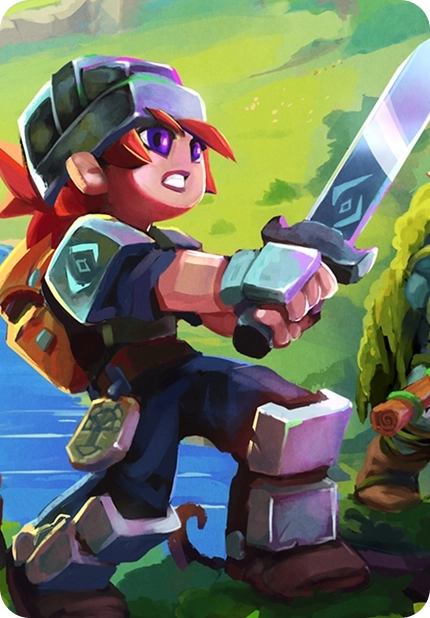
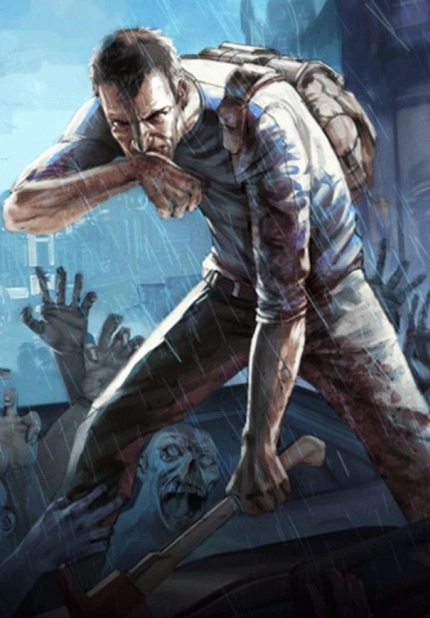
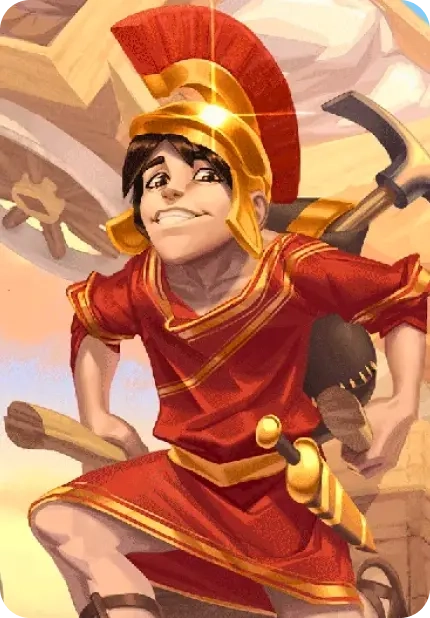
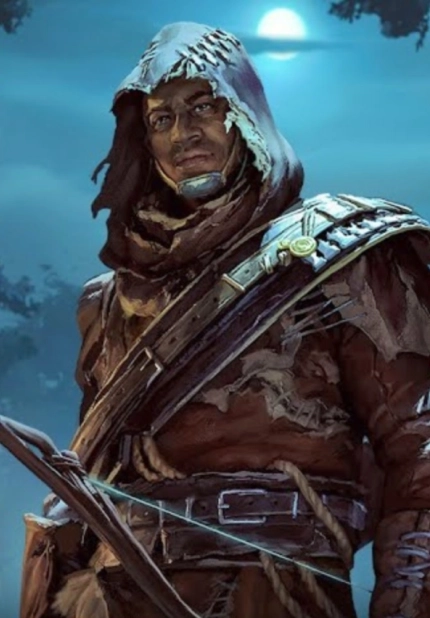
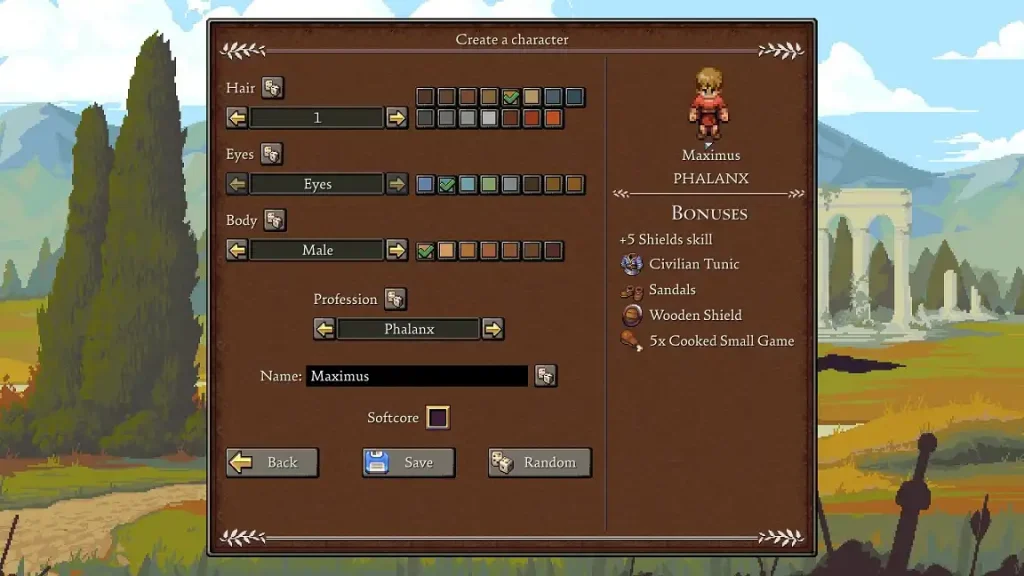 New Romestead players start by creating their post-apocalyptic Roman. The game sets itself apart by letting players choose from eight professions, each with unique starting items, gear, and skills.
Note that choosing a starting profession does not deter you from building the character your way. For example, choose the Gladiator profession, but play the game as a Scholar. Over time, it’s possible to max out every skill and get each item in the game. This profession mechanic generally lets players choose a class that would help them spearhead the early game with their preferred playstyle.
With that, the eight professions and their bonuses are the following:
New Romestead players start by creating their post-apocalyptic Roman. The game sets itself apart by letting players choose from eight professions, each with unique starting items, gear, and skills.
Note that choosing a starting profession does not deter you from building the character your way. For example, choose the Gladiator profession, but play the game as a Scholar. Over time, it’s possible to max out every skill and get each item in the game. This profession mechanic generally lets players choose a class that would help them spearhead the early game with their preferred playstyle.
With that, the eight professions and their bonuses are the following:
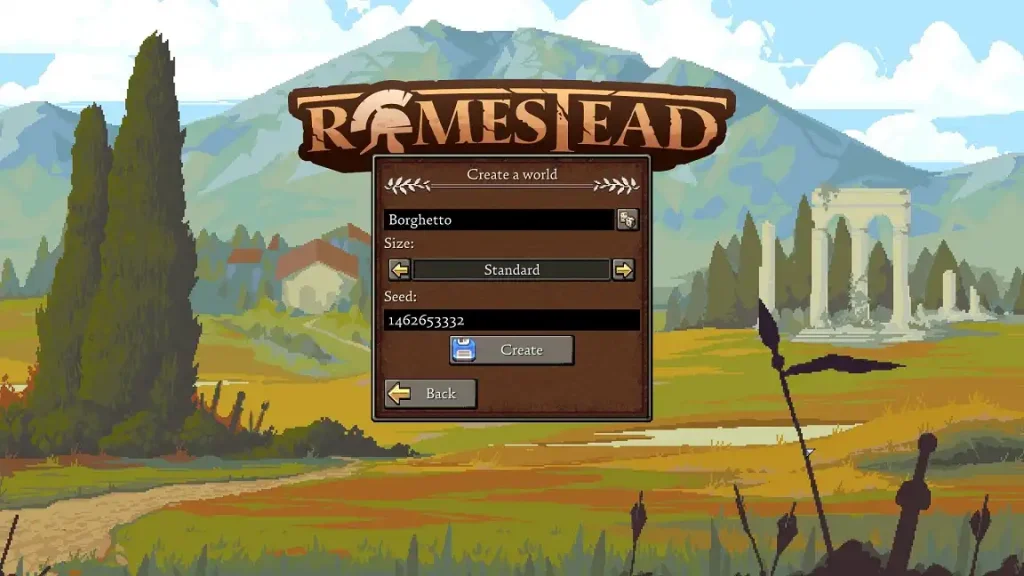 Each campaign in Romestead is fundamentally unique, thanks to its procedurally generated worlds. After creating a character, the game asks you to create a world seed using different parameters.
Despite each world being different, they all contain five distinct biomes: Plains, Forest, Swamp, Desert, and Volcano. Each region has unique threats and resources.
Below is a quick overview of each biome in Romestead to let you know what to expect when exploring each location:
Each campaign in Romestead is fundamentally unique, thanks to its procedurally generated worlds. After creating a character, the game asks you to create a world seed using different parameters.
Despite each world being different, they all contain five distinct biomes: Plains, Forest, Swamp, Desert, and Volcano. Each region has unique threats and resources.
Below is a quick overview of each biome in Romestead to let you know what to expect when exploring each location:
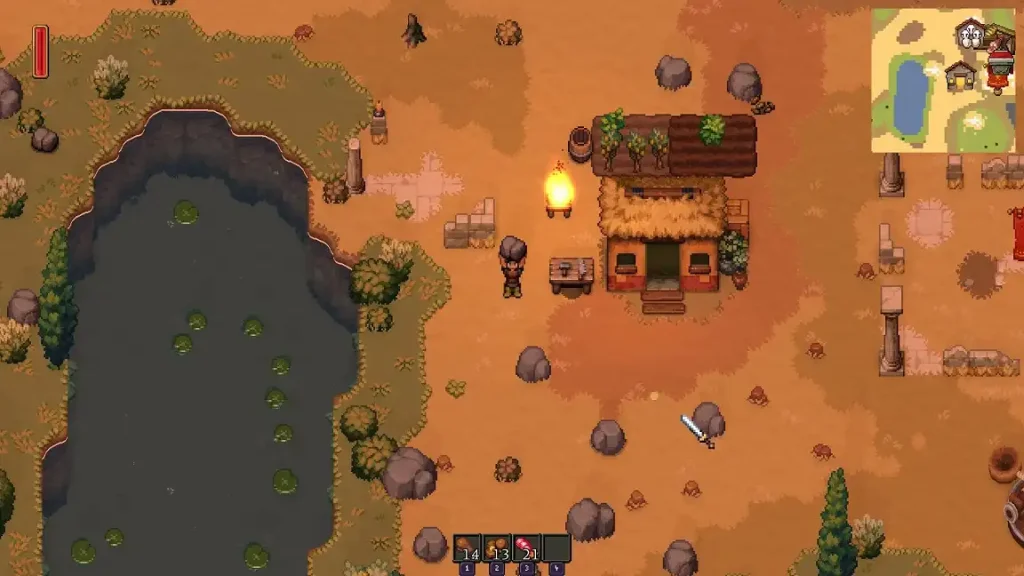 Arguably, the most distinct feature separating Romestead Early Access from similar titles like Valheim or Core Keeper is its physicalized resource management system.
Unlike other games with seemingly bottomless backpacks, Romestead requires its players to carry and throw/drop certain resources. For instance, pick up stones and place them into piles. Alternatively, chop trees for lumber. Then, place the large block of wood on a stump to chop it into smaller pieces.
Some new players may see this system as a logistical hassle. However, it’s a dynamic combat tool, as you can throw your carried item in the direction of an enemy, damaging the NPC in the process. Deal with the hostile, and resume your resource management task.
Arguably, the most distinct feature separating Romestead Early Access from similar titles like Valheim or Core Keeper is its physicalized resource management system.
Unlike other games with seemingly bottomless backpacks, Romestead requires its players to carry and throw/drop certain resources. For instance, pick up stones and place them into piles. Alternatively, chop trees for lumber. Then, place the large block of wood on a stump to chop it into smaller pieces.
Some new players may see this system as a logistical hassle. However, it’s a dynamic combat tool, as you can throw your carried item in the direction of an enemy, damaging the NPC in the process. Deal with the hostile, and resume your resource management task.
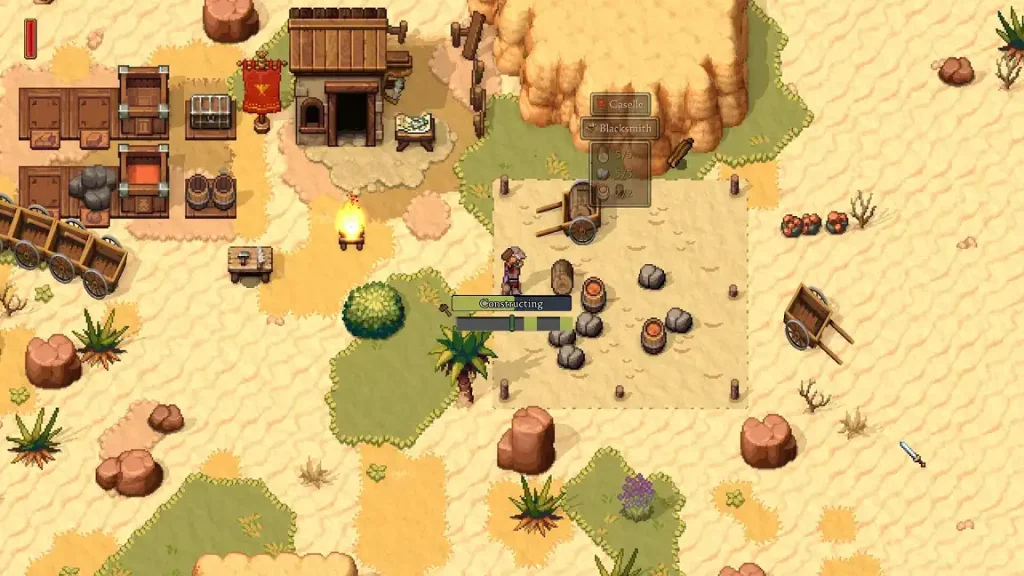
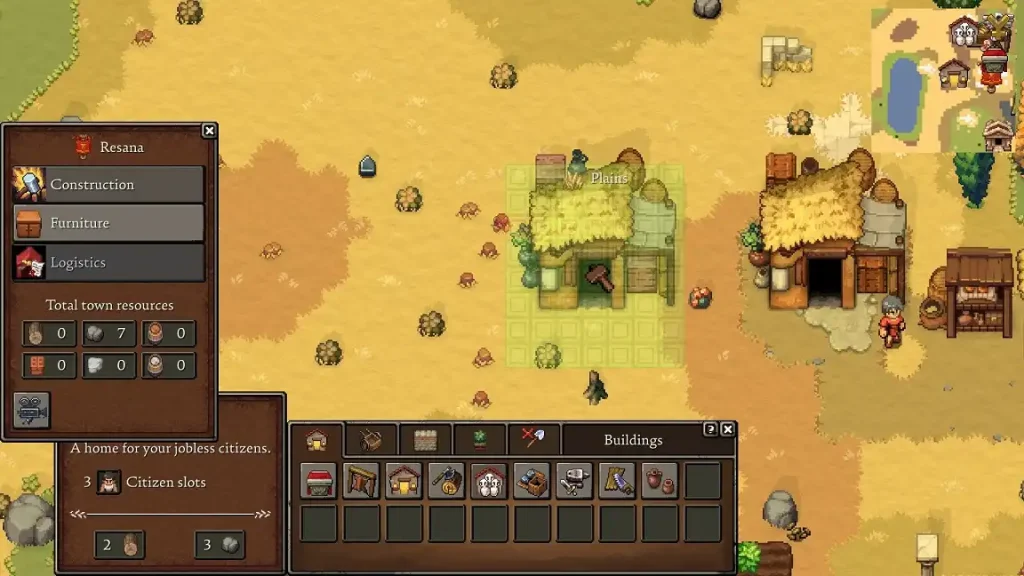 Constructing buildings and structures in Romestead also takes advantage of the carry-and-throw system. Start by interacting with the Workbench, then select a building or structure to develop. Choose a place for it afterward.
Next, carry and throw/drop the required resources on the plot of land where the building or structure will appear. Once completed, press “E” (by default) to begin the construction minigame. Hit “E” at the right moment to fill up the completion meter. The building or structure appears once the gauge is completely filled.
Constructing buildings and structures in Romestead also takes advantage of the carry-and-throw system. Start by interacting with the Workbench, then select a building or structure to develop. Choose a place for it afterward.
Next, carry and throw/drop the required resources on the plot of land where the building or structure will appear. Once completed, press “E” (by default) to begin the construction minigame. Hit “E” at the right moment to fill up the completion meter. The building or structure appears once the gauge is completely filled.
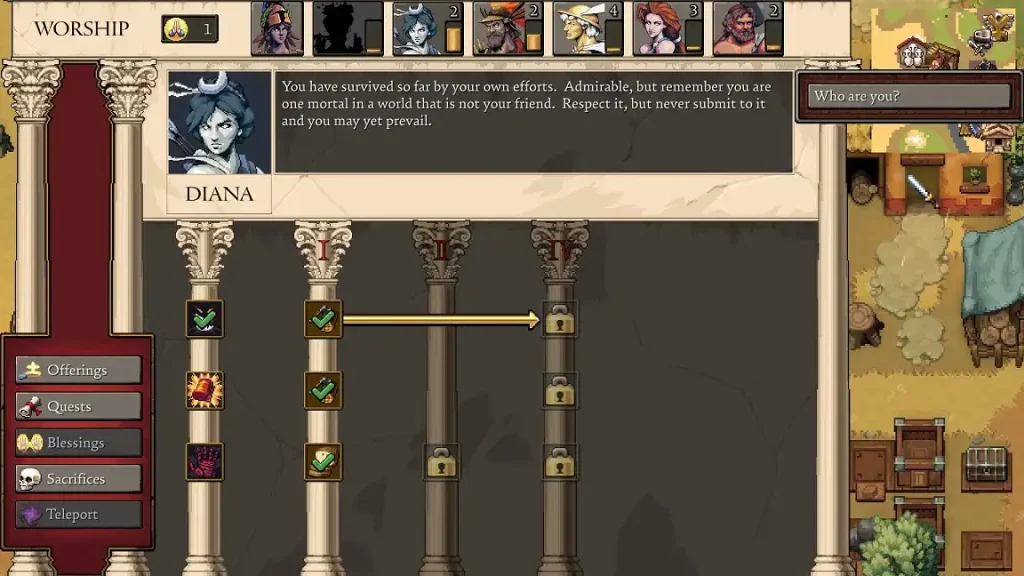 One of the first objectives in the tutorial requires you to build an Altar. Interacting with this building allows you to sacrifice certain items to worship specific gods. Giving the right item will appease a specific god and grant 1x Worship Point after filling the meter. Spend Worship Points for permanent buffs, ranging from increasing building defenses to townsfolk finding additional items while working.
At first, the gods appear as shadowy figures upon accessing the Altar’s interface. Fill each god or goddess’s meter once, and their image appears. The item given appeases the god or goddess associated with it. For example, sacrificing a foraged item will worship Diana, the goddess of Nature, Hunting, and the Moon.
The other gods and goddesses in Romestead are as follows:
One of the first objectives in the tutorial requires you to build an Altar. Interacting with this building allows you to sacrifice certain items to worship specific gods. Giving the right item will appease a specific god and grant 1x Worship Point after filling the meter. Spend Worship Points for permanent buffs, ranging from increasing building defenses to townsfolk finding additional items while working.
At first, the gods appear as shadowy figures upon accessing the Altar’s interface. Fill each god or goddess’s meter once, and their image appears. The item given appeases the god or goddess associated with it. For example, sacrificing a foraged item will worship Diana, the goddess of Nature, Hunting, and the Moon.
The other gods and goddesses in Romestead are as follows:
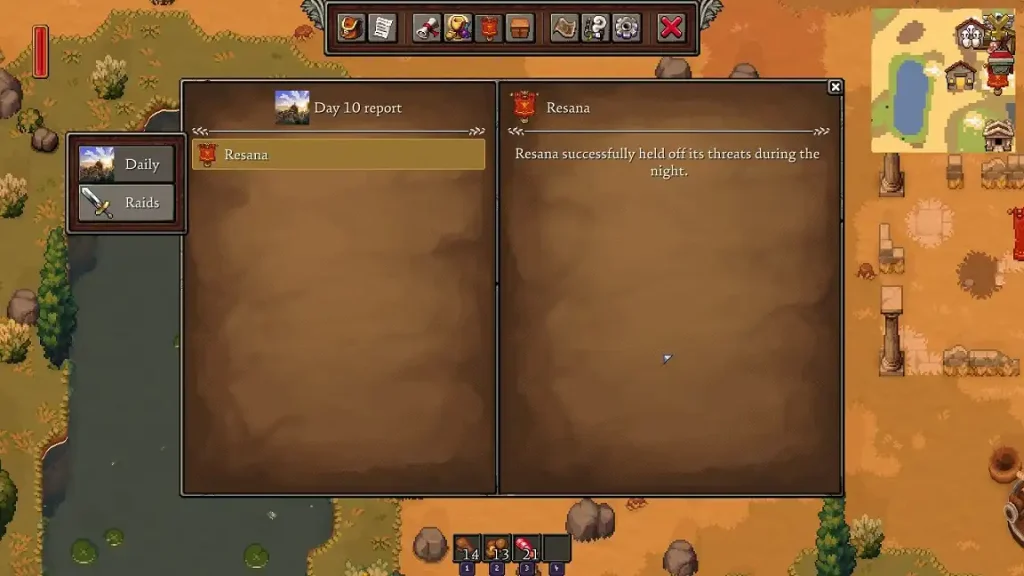 The silence of the night fills the new Roman Empire with dread, as zombies and other nightmarish creatures approach the developing city. Without proper defenses, these hostile beings hunt you and your citizens.
Start surviving the hordes by building simple defenses, such as wooden barricades. Place offensive structures, such as catapults, to actively fend off night raids. Survive by defeating the enemies or by waiting for sunrise.
The silence of the night fills the new Roman Empire with dread, as zombies and other nightmarish creatures approach the developing city. Without proper defenses, these hostile beings hunt you and your citizens.
Start surviving the hordes by building simple defenses, such as wooden barricades. Place offensive structures, such as catapults, to actively fend off night raids. Survive by defeating the enemies or by waiting for sunrise.
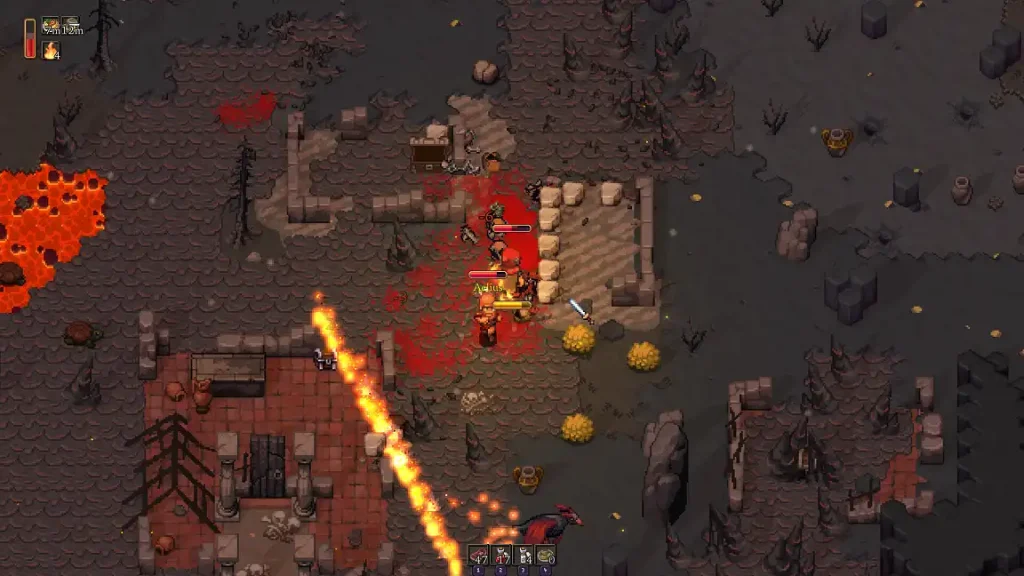 Building a new Rome can be tough with only a pair of hands. Thankfully, Romestead servers support up to eight players in co-op multiplayer. Doing so lets players divide roles to speed up progression. For example, one player stays behind to manage logistics while another hunts for food to ensure the townsfolk remain fed.
Online co-op in Romestead also features a “SaveSync” system that allows the host to share world saves. That way, players don’t have to wait for the host to start the server, as the original server administrator can transfer the privileges to another person. This way, campaigns can continue even if the main host is absent.
Building a new Rome can be tough with only a pair of hands. Thankfully, Romestead servers support up to eight players in co-op multiplayer. Doing so lets players divide roles to speed up progression. For example, one player stays behind to manage logistics while another hunts for food to ensure the townsfolk remain fed.
Online co-op in Romestead also features a “SaveSync” system that allows the host to share world saves. That way, players don’t have to wait for the host to start the server, as the original server administrator can transfer the privileges to another person. This way, campaigns can continue even if the main host is absent.
Romestead Beginner’s Guide: What to Know & Expect
Building a civilization from the ashes of a zombie apocalypse isn’t easy. Also, the undead hordes trying to impede the city’s rebirth aren’t helping. Start by managing a complex settlement while embarking on treacherous expeditions. This Romestead Beginner’s Guide helps you understand how the gods, survivors, and combat systems intersect to ensure you don’t become another statistic in what could be Rome’s second fall.
Romestead Features & Systems
Character Creation & Professions
New Romestead players start by creating their post-apocalyptic Roman. The game sets itself apart by letting players choose from eight professions, each with unique starting items, gear, and skills.
Note that choosing a starting profession does not deter you from building the character your way. For example, choose the Gladiator profession, but play the game as a Scholar. Over time, it’s possible to max out every skill and get each item in the game. This profession mechanic generally lets players choose a class that would help them spearhead the early game with their preferred playstyle.
With that, the eight professions and their bonuses are the following:
Gladiator
- Skill: +5 Swords
- Starting Gear: Civilian Tunic, Sandals, and Flint Gladius
- Starting Items: 5x Cooked Small Game
Lobber
- Skill: +5 Throwing
- Starting Gear: Civilian Tunic and Wrist Wraps
- Starting Items: 5x Cooked Small Game
Miner
- Skill: +5 Mining
- Starting Gear: Civilian Tunic, Sandals, and Flint Pickaxe
- Starting Items: 5x Cooked Small Game
Scholar
- Skill: +5 Scrolls
- Starting Gear: Civilian Tunic, Sandals, Scroll of the Novice
- Starting Items: 5x Cooked Small Game
Legionary
- Skill: +5 Spears
- Starting Gear: Civilian Tunic, Sandals, and Flint Hasta
- Starting Items: 5x Cooked Small Game
Mechanicus
- Skill: +5 Construction
- Starting Gear: Civilian Tunic, Sandals, and Workbench
- Starting Items: 5x Cooked Small Game
Phalanx
- Skill: +5 Shields
- Starting Gear: Civilian Tunic, Sandals, and Wooden Shield
- Starting Items: 5x Cooked Small Game
Woodcutter
- Skill: +5 Woodcutting
- Starting Gear: Civilian Tunic, Sandals, and Flint Axe
- Starting Items: 5x Cooked Small Game
World Creation & Biomes
Each campaign in Romestead is fundamentally unique, thanks to its procedurally generated worlds. After creating a character, the game asks you to create a world seed using different parameters.
Despite each world being different, they all contain five distinct biomes: Plains, Forest, Swamp, Desert, and Volcano. Each region has unique threats and resources.
Below is a quick overview of each biome in Romestead to let you know what to expect when exploring each location:
- Plains: The starting biome for every new Romestead player. Here, you’ll find essential resources, tutorials, and the first villagers.
- Forest: Sitting outside the Plains biome, the Forest is an expansive and challenging region with unique buildings, encounters, and a sense of claustrophobia.
- Desert: The Desert biome provides a difficulty spike after spending time in the Forest. Resources are scarce in this location, and most enemies attack you on sight.
- Volcano: Romestead Early Access’s current endgame, as it has highly hostile NPCs that require significant preparation.
- Swamp: Although seemingly unfinished, the Swamp biome is divided into two areas. A river connects these locations, but you’ll typically find resources and enemies also found in other locations.
Carry & Throw System
Arguably, the most distinct feature separating Romestead Early Access from similar titles like Valheim or Core Keeper is its physicalized resource management system.
Unlike other games with seemingly bottomless backpacks, Romestead requires its players to carry and throw/drop certain resources. For instance, pick up stones and place them into piles. Alternatively, chop trees for lumber. Then, place the large block of wood on a stump to chop it into smaller pieces.
Some new players may see this system as a logistical hassle. However, it’s a dynamic combat tool, as you can throw your carried item in the direction of an enemy, damaging the NPC in the process. Deal with the hostile, and resume your resource management task.
Building & Construction
Constructing buildings and structures in Romestead also takes advantage of the carry-and-throw system. Start by interacting with the Workbench, then select a building or structure to develop. Choose a place for it afterward.
Next, carry and throw/drop the required resources on the plot of land where the building or structure will appear. Once completed, press “E” (by default) to begin the construction minigame. Hit “E” at the right moment to fill up the completion meter. The building or structure appears once the gauge is completely filled.
Progression Through Gods & Bosses
One of the first objectives in the tutorial requires you to build an Altar. Interacting with this building allows you to sacrifice certain items to worship specific gods. Giving the right item will appease a specific god and grant 1x Worship Point after filling the meter. Spend Worship Points for permanent buffs, ranging from increasing building defenses to townsfolk finding additional items while working.
At first, the gods appear as shadowy figures upon accessing the Altar’s interface. Fill each god or goddess’s meter once, and their image appears. The item given appeases the god or goddess associated with it. For example, sacrificing a foraged item will worship Diana, the goddess of Nature, Hunting, and the Moon.
The other gods and goddesses in Romestead are as follows:
- Minerva: The goddess of wisdom
- Ceres: The goddess of agriculture and crops
- Mars: The god of War
- Mercury: The god of speed, innovation, and trade
- Venus: The goddess of love and beauty
- Vulcan: The god of fire and forge
Town Defense & Night Raids
The silence of the night fills the new Roman Empire with dread, as zombies and other nightmarish creatures approach the developing city. Without proper defenses, these hostile beings hunt you and your citizens.
Start surviving the hordes by building simple defenses, such as wooden barricades. Place offensive structures, such as catapults, to actively fend off night raids. Survive by defeating the enemies or by waiting for sunrise.
Co-Op Multiplayer
Building a new Rome can be tough with only a pair of hands. Thankfully, Romestead servers support up to eight players in co-op multiplayer. Doing so lets players divide roles to speed up progression. For example, one player stays behind to manage logistics while another hunts for food to ensure the townsfolk remain fed.
Online co-op in Romestead also features a “SaveSync” system that allows the host to share world saves. That way, players don’t have to wait for the host to start the server, as the original server administrator can transfer the privileges to another person. This way, campaigns can continue even if the main host is absent.Cria o teu próprio servidor de
Romestead
Romestead
Escolhe um plano, seleciona um jogo e joga com os teus amigos!
Subscreve a nossa Newsletter
Subscreve para receber as últimas atualizações sobre tudo do mundo dos jogos!

Junta-te ao nosso Discord
Entra na nossa comunidade com mais de 20.000 membros com os mesmos interesses!
Como avaliarias este blog?
Partilha a tua opinião e ajuda-nos a tornar os nossos blogs ainda melhores!
Não gostei
Neutro
Gostei
Precisas de um servidor de jogo?
Aluga um servidor de jogo onde tu e os teus amigos podem jogar em privado com baixa latência e definições personalizadas. Escolhe entre 110+ jogos, convida pessoas de todo o mundo e desfruta de partidas privadas, ou constrói a tua própria comunidade online com as tuas próprias regras.

Blogs Relevantes


FICA A PAR DE TUDO!
Junta-te ao nosso e-mail para receberes atualizações sobre os nossos jogos alojados, notícias da empresa e promoções exclusivas. Fica a par!